Although the United States was created as a nation of immigrants, outsiders after the initial wave were quickly and repeatedly looked down upon. Additionally, there were repeated attempts to both limit the rights and immigration levels of these so-called "outsiders".
One of the first movements that were partly based off of targetting immigrants was the Temperance Movement. this supported the ban on the production, sale, and consumption of alcohol. Supporters argued that alcohol caused men to beat their wives and waste their paycheck; more importantly, alcohol was purportedly more popular among immigrants, such as the Catholic Irish. This quickly drew supporters as many Americans disliked the "rowdy" Irish Immigrants and the largely Protestant population was against Catholicism.
Further conflicts arose during the mid 19th century, as middle-class Americans were unhappy over the fact that immigrants were stealing their jobs for lower wages.A political party that fed on these beliefs was the know-nothing party. This Party was strongly against Catholics, and the name "Know-Nothing" came from the fact that it was a secret organization, and any members were supposed to respond that they "knew nothing" if asked. The party very quickly spread in influence as it harnessed the opinions of the Protestant majority and at its peak, even won the Massachusetts Legislation.
The late 19th century saw the Chinese exclusion act, which as the name suggests, severely limited the immigration of Chinese people. This bill, which was passed in 1882, passed new guidelines that excluded all skilled, unskilled, and miners from immigrating. This continued to 1943, with a yearly quota of only 105 Chinese people. Continued after this bill was the immigrant act of 1924, which still limited the number of immigrants using a national quota.
Ever since the creation of the USA, there have been repeated movements and bills that tried to limit the influx of immigrants. This pushback against immigrants has continued into the current day, and it is yet to be seen whether it will change in the future.
https://www.thoughtco.com/temperance-movement-prohibition-timeline-3530548
http://www.ohiohistorycentral.org/w/Know-Nothing_Party
https://www.ourdocuments.gov/doc.php?flash=false&doc=47
https://history.state.gov/milestones/1921-1936/immigration-act
Saturday, April 28, 2018

Nuclear Submarines
A nuclear submarine is a submarine powered by a small nuclear reactor on board. This combined with the use of electrolysis for breathable oxygen and lithium hydroxide to filter the carbon dioxide, means that the only reason to surface is for consumables (food) and maintenance on the hull. The on board reactor intakes some seawater, then heats it up with the radioactive element (usually low-enriched Uranium), which then is used to power the turbine (with electric motors or steam and a turbine) to make the submarine go forward.
The first nuclear submarine was launched in January 1955 by the United States called the USS Nautilus. This was closely followed by the Soviets launching their first submarine in 1958. At the height of the arms race, the Soviet Union produced 245 nuclear submarines which was more than all the other nations combined.
The nuclear submarine was part of the nuclear triad. This was part of the United State’s plan to revolt against the Soviet Union, should they attack America. The idea was to have crafts capable of carrying nukes coming from land, air, and sea. With nuclear submarines, both sides could sneak up of the other nation’s shores and stay submerged for long periods of time. The main downside for early nuclear powered submarines is that they left a large heat trail the could be seen with infrared cameras (developed in 1929) that eventually found its way up to the surface making a path that leads straight to the position of the submarine.
From 1960 to 1989, there were 14 major documented nuclear failures on Soviet submarines. These issues range from cooling system failure to improper refueling and maintenance on the reactor. There were other incidents on nuclear submarines involving the reactor indirectly. These include overheating, flooding, or melted valves in the ballasts causing the sailors to be stuck under water and starve.
Nuclear submarines increased both side’s functionality in terms of naval combat and surveillance. This brought both sides closer to destroying each other, but because of the balance established by MAD, neither side launched warheads.
Sources:
George H.W. Bush
George Herbert Walker Bush was the 41st president of the United States. He was one of the most qualified candidates to ever become president, having served in the army and in a variety of political positions beforehand. Bush was adept at dealing with the foreign policy issues which arose during his term, but his term was marred by domestic economic problems which he failed to adequately address.
On his 18th birthday, Bush committed himself to the Armed Forces and served as a Navy pilot, flying 58 combat missions. During World War II, while he was on a mission over the Pacific Ocean, Bush’s plane was shot down by Japanese anti-aircraft fire. However, he was still able to complete his bombing run before parachuting into the sea, where he was rescued by a submarine. For this bravery, he was awarded the Distinguished Flying Cross.
After returning from war, building a family, graduating from Yale, and succeeding greatly in the oil industry in Texas, Bush developed an interest in serving politically. In 1964, Bush ran for the US Senate seat from Texas, but lost in the general election. He then served two terms in the House before another failed attempt to gain a Senate seat. In 1971, Nixon appointed Bush to be the ambassador to the UN and in 1973, Bush moved to being the chairman of the Republican party. As chairman, Bush pushed for Nixon to resign after the Watergate scandal. In 1974, Ford appointed Bush as Chief of the US Liaison Office in China and in 1976, he served as the director of the CIA.
After two terms as vice president under Ronald Reagan, Bush ran for president and won against Dukakis in a 426-111 electoral vote landslide. During his presidency, Bush was extremely skilled in handling US foreign policy. As the Soviet Union fell, rather than pushing US ideals, Bush took a softer approach. He improved relations and signed the Strategic Arms Reduction Treaty with Gorbachev to reduce the nuclear threat. When Kuwait was invaded, Bush pushed for US and UN intervention, which resulted in the successful run of Desert Storm. The US also overthrew corrupt dictator Manuel Noriega’s regime in Panama. However, Bush failed to aid the economy. During his run, he emphasized that there would be no new taxes, but ended up agreeing with Congress on a plan which would include new taxes. This, in addition to lack of progress elsewhere in terms of domestic programs, caused voters to turn against him and vote in Bill Clinton during the next election.
George H.W. Bush came into the White House with many qualifications and certainly succeeded in many aspects of his presidency. However, his lack of focus on the home front lost public support and his campaign promises ended up coming back to bite him.
https://www.whitehouse.gov/about-the-white-house/presidents/george-h-w-bush/
https://www.biography.com/people/george-hw-bush-38066
https://www.history.com/topics/us-presidents/george-bush
On his 18th birthday, Bush committed himself to the Armed Forces and served as a Navy pilot, flying 58 combat missions. During World War II, while he was on a mission over the Pacific Ocean, Bush’s plane was shot down by Japanese anti-aircraft fire. However, he was still able to complete his bombing run before parachuting into the sea, where he was rescued by a submarine. For this bravery, he was awarded the Distinguished Flying Cross.
After returning from war, building a family, graduating from Yale, and succeeding greatly in the oil industry in Texas, Bush developed an interest in serving politically. In 1964, Bush ran for the US Senate seat from Texas, but lost in the general election. He then served two terms in the House before another failed attempt to gain a Senate seat. In 1971, Nixon appointed Bush to be the ambassador to the UN and in 1973, Bush moved to being the chairman of the Republican party. As chairman, Bush pushed for Nixon to resign after the Watergate scandal. In 1974, Ford appointed Bush as Chief of the US Liaison Office in China and in 1976, he served as the director of the CIA.
After two terms as vice president under Ronald Reagan, Bush ran for president and won against Dukakis in a 426-111 electoral vote landslide. During his presidency, Bush was extremely skilled in handling US foreign policy. As the Soviet Union fell, rather than pushing US ideals, Bush took a softer approach. He improved relations and signed the Strategic Arms Reduction Treaty with Gorbachev to reduce the nuclear threat. When Kuwait was invaded, Bush pushed for US and UN intervention, which resulted in the successful run of Desert Storm. The US also overthrew corrupt dictator Manuel Noriega’s regime in Panama. However, Bush failed to aid the economy. During his run, he emphasized that there would be no new taxes, but ended up agreeing with Congress on a plan which would include new taxes. This, in addition to lack of progress elsewhere in terms of domestic programs, caused voters to turn against him and vote in Bill Clinton during the next election.
George H.W. Bush came into the White House with many qualifications and certainly succeeded in many aspects of his presidency. However, his lack of focus on the home front lost public support and his campaign promises ended up coming back to bite him.
https://www.whitehouse.gov/about-the-white-house/presidents/george-h-w-bush/
https://www.biography.com/people/george-hw-bush-38066
https://www.history.com/topics/us-presidents/george-bush
Kennedy's Camelot Legacy
As the incumbent President, John F. Kennedy was very popular and well-liked. However, without his sudden and tragic assassination, it's unlikely that America as a whole would remember Kennedy quite as fondly as we do today. Much of Kennedy's legacy can be attributed to the interview given by his wife, Jacqueline Kennedy Onassis, after his death, in which she created the "Camelot" analogy between JFK's presidency and King Arthur's mystical kingdom.
Jacqueline Kennedy created JFK's legacy shortly after his death in an interview for an issue of Life magazine, written by Theodore White. Speaking of the legacy of JFK's presidency, she said: "There will be great presidents again, but there will never be another Camelot.” This established his legacy as the greatest president ever. She mentioned Camelot repeatedly, saying that the Broadway musical Camelot was one of JFK's favorites.
White wrote a draft of his article and sent it to his editors over the phone. Initially, they disliked the Camelot metaphor and rejected to include it in the article. However, Onassis was listening to the phone call and pressed the inclusion of "Camelot", which the editors soon obliged to. White later wrote that he deeply regretted including this metaphor, because of the vast transmission of this myth to the public.
The Camelot metaphor proved to be extremely influential in memorializing JFK in history. It vastly improved most Americans' image of him as a President. Onassis' quote "There will be great presidents again, but there will never be another Camelot," insinuated that Kennedy was the best yet and the best to come, which, ultimately had both positive and negative effects on the country.
One reason that Camelot was not necessarily the best was that in inaccurately portrayed JFK. During his time in office, he was a practical liberal, who would "pay any price, bear any burden, meet any hardship, support any friend, oppose any foe to assure the survival and the success of liberty." His policies, both foreign and domestic, were always logical and practical. His outlook on the world and politics was not that of an idealist. However, the Camelot metaphor was idyllic and painted him as a hopeful who believed that heroes made history. It far more accurately represented the ideas of Onassis than the ideas of JFK.
The Camelot was also problematic that it insinuated that JFK was the best yet to come. It made many people lose hope in the idea of progress because they believed that the best had already happened. This greatly diminished the power of the liberal agenda, who had, according to many inside and outside the party, seen its best days. This ultimately led, in part, to the election of Nixon in 1968, as many were looking for hope in face of liberal stagnancy.
Despite the present-day lukewarm analysis of Onassis' Camelot metaphor, her commitment to preserving the life and legacy of JFK is admirable. Through her work, JFK was established as one of the greatest presidents of the modern era.

Sources:
https://www.thedailybeast.com/how-jackie-kennedy-invented-the-camelot-legend-after-jfks-death
https://www.brainyquote.com/quotes/john_f_kennedy_114918
https://nypost.com/2013/11/10/inventing-camelot-how-jackie-kennedy-shaped-her-husbands-legacy/
Jacqueline Kennedy created JFK's legacy shortly after his death in an interview for an issue of Life magazine, written by Theodore White. Speaking of the legacy of JFK's presidency, she said: "There will be great presidents again, but there will never be another Camelot.” This established his legacy as the greatest president ever. She mentioned Camelot repeatedly, saying that the Broadway musical Camelot was one of JFK's favorites.
White wrote a draft of his article and sent it to his editors over the phone. Initially, they disliked the Camelot metaphor and rejected to include it in the article. However, Onassis was listening to the phone call and pressed the inclusion of "Camelot", which the editors soon obliged to. White later wrote that he deeply regretted including this metaphor, because of the vast transmission of this myth to the public.
The Camelot metaphor proved to be extremely influential in memorializing JFK in history. It vastly improved most Americans' image of him as a President. Onassis' quote "There will be great presidents again, but there will never be another Camelot," insinuated that Kennedy was the best yet and the best to come, which, ultimately had both positive and negative effects on the country.
One reason that Camelot was not necessarily the best was that in inaccurately portrayed JFK. During his time in office, he was a practical liberal, who would "pay any price, bear any burden, meet any hardship, support any friend, oppose any foe to assure the survival and the success of liberty." His policies, both foreign and domestic, were always logical and practical. His outlook on the world and politics was not that of an idealist. However, the Camelot metaphor was idyllic and painted him as a hopeful who believed that heroes made history. It far more accurately represented the ideas of Onassis than the ideas of JFK.
The Camelot was also problematic that it insinuated that JFK was the best yet to come. It made many people lose hope in the idea of progress because they believed that the best had already happened. This greatly diminished the power of the liberal agenda, who had, according to many inside and outside the party, seen its best days. This ultimately led, in part, to the election of Nixon in 1968, as many were looking for hope in face of liberal stagnancy.
Despite the present-day lukewarm analysis of Onassis' Camelot metaphor, her commitment to preserving the life and legacy of JFK is admirable. Through her work, JFK was established as one of the greatest presidents of the modern era.
Sources:
https://www.thedailybeast.com/how-jackie-kennedy-invented-the-camelot-legend-after-jfks-death
https://www.brainyquote.com/quotes/john_f_kennedy_114918
https://nypost.com/2013/11/10/inventing-camelot-how-jackie-kennedy-shaped-her-husbands-legacy/
Miracle on Ice
"Do you believe in miracles" is a famous quote said by Al Michael's an NBC television broadcaster as the American National hockey team defeated the powerhouse Russian National team. The game between the Americans and the Russians was actually a semi final round which is the round to get into the championship and everyone before that game expected the Russians to wipe the floor with the Americans. The Americans had such a weak and young team that nobody expected them to compete with the Soviets who had trained professional athletes playing for the Russian team. The Americans were players younger than 20 and some of them had only played hockey for a few years before so for the Americans to beat the Russians it was big news and a "miracle." The soviets had won 5 of the 6 last gold medals in the olympics so they were already a lock on winning it in 1980 also but the Americans had to spoil those plans. Finishing the first period tied at 2–2, and the Soviets leading 3–2 following the second, the U.S. team scored two more goals to take their first lead during the third and final period, winning the game 4–3 in a major upset. The Americans were able to keep the Soviets from scoring in the final 10 minutes of the game which was crazy since they had the best offensive players in the world at that time.
The olympic games were in Russia in 1980 and the United States were considering boycotting these olympics under Jimmy Carter in protest of the Soviets invading Afghanistan the year earlier. So a lot of political issues were still going on as the Cold War had ended and these two nations still hated each other and were rivals. This made the fact that the Soviets lost even worse because this just made their whole country even more mad at the United States as we once again proved that democracy and freedom is the better method of running a country. Then the Americans had to play Finland in the championship for the Gold Medal and surprisingly enough they beat that team also. Everything was going right for the Americans playing hockey in the Olympics and so much pride and joy in the United States was generated from these great athletes being world champions of a very competitive and hard fought sport.
https://www.history.com/news/the-miracle-on-ice-35-years-ago

The olympic games were in Russia in 1980 and the United States were considering boycotting these olympics under Jimmy Carter in protest of the Soviets invading Afghanistan the year earlier. So a lot of political issues were still going on as the Cold War had ended and these two nations still hated each other and were rivals. This made the fact that the Soviets lost even worse because this just made their whole country even more mad at the United States as we once again proved that democracy and freedom is the better method of running a country. Then the Americans had to play Finland in the championship for the Gold Medal and surprisingly enough they beat that team also. Everything was going right for the Americans playing hockey in the Olympics and so much pride and joy in the United States was generated from these great athletes being world champions of a very competitive and hard fought sport.
https://www.history.com/news/the-miracle-on-ice-35-years-ago

Jackie robinson in baseball color barriers
Jackie Robinson became the first black athlete to play in the MLB breaking the color barrier that had been there since the creation of the league. He immediately took the league by storm by winning Rookie of the Year in 1947 then 2 years later he won MVP of the League. Back then they were called the Brooklyn Dodgers and he won his first championship in 1955 when more black players were being integrated into the MLB. He was such a good player and exciting to watch as he batted a .311 career batting average which is way better than a lot of other MLB legends can do. What also made him so exciting is that he was able to steal home base regularly which is very hard to do and he did it 19 times in his career. We usually don't even see any players steal home base anymore in todays league because of the difficulty. He also had 197 stolen bases in his career which was insane back then and still today as stealing bases is very hard also. He also had the ability to hit the ball over the wall as he had 137 career home runs which is very good.
As hard as it is to make the MLB and be very good in it what made it even more difficult was the harassment Jackie had to endure to play for the Brooklyn Dodgers. America was still very segregated and racist in the late 40's which made it so surprising that the manager of the Dodgers was going to bring in a black man to play baseball for the team. It was reported some of the players on the team did not even want to be playing with an African-American either which created even more struggles for Jackie. He would have to endure incredibly racist and hurtful taunts coming from his teammates, the fans, and even umpires. But the only thing he couldn't do was fight back and he knew that since the beginning of his career. His family received threats from others and he was put through hell to play the game he loved so much just because of the color of his skin. We look back on his career today as one of the most important moments in sports history and each year they celebrate Jackie Robinson day where each player wears the number 42 to honor him.
https://www.biography.com/people/jackie-robinson-9460813

As hard as it is to make the MLB and be very good in it what made it even more difficult was the harassment Jackie had to endure to play for the Brooklyn Dodgers. America was still very segregated and racist in the late 40's which made it so surprising that the manager of the Dodgers was going to bring in a black man to play baseball for the team. It was reported some of the players on the team did not even want to be playing with an African-American either which created even more struggles for Jackie. He would have to endure incredibly racist and hurtful taunts coming from his teammates, the fans, and even umpires. But the only thing he couldn't do was fight back and he knew that since the beginning of his career. His family received threats from others and he was put through hell to play the game he loved so much just because of the color of his skin. We look back on his career today as one of the most important moments in sports history and each year they celebrate Jackie Robinson day where each player wears the number 42 to honor him.
https://www.biography.com/people/jackie-robinson-9460813

Friday, April 27, 2018
Ball Sports in America
The three most popular sports in the United States are American football, basketball, and baseball. The market for professional sports in the United States is roughly $69 billion, roughly 50% larger than that of all of Europe, the Middle East, and Africa combined.

Basketball:
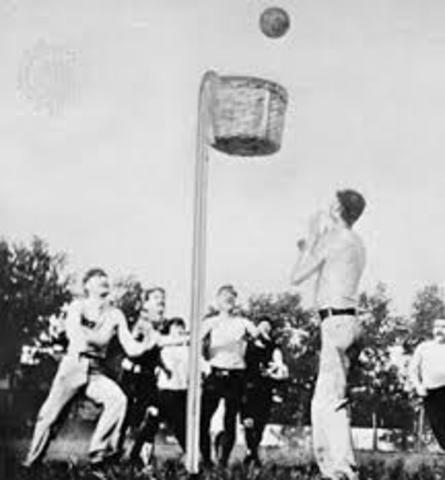
Basketball was created in a high school P.E. class in which the teacher needed to keep the students exercising on rainy days. Over time, the sport evolved and many aspects of the game were changed over time like removing the bottom of the basket so that the ball could fall through like it does today. The ball itself evolved over time as well. The laces were removed to make the bouncing pattern more reliable and the ball was turned orange to make it more visible. Backboards were added, and rules were defined. Basketball has been adopted by various social groups, which have established their own environments and sometimes their own rules. Basketball is especially popular in urban cities where space is limited and playing fields are few and far between. Many kids grow up playing in their neighborhood court, on private traveling teams, representing their schools, or a combination of the three. College basketball at the national level offer what many call the most competitive and entertaining games; as a result, offices across the country have competitions or “pools" in which entrants predict which of the initial 64 teams will win the annual NCAA tournament.
Baseball:
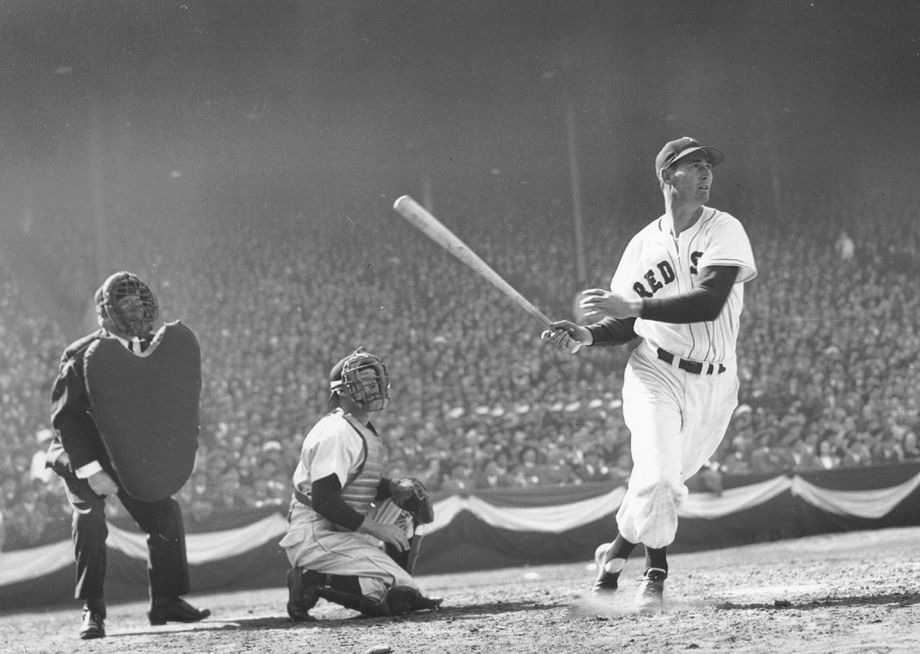
Baseball evolved from older bat-and-ball games already being played in England by the mid-18th century. This game was brought by immigrants to North America, where the modern version developed. By the late 19th century, baseball was widely recognized as the national sport of the United States. In the mid-1850s, a baseball craze hit the New York metropolitan area. By 1856, local journals were referring to baseball as the "national pastime" or "national game." A year later, sixteen area clubs formed the sport's first governing body, the National Association of Base Ball Players. The sport has seen pretty drastic changes over the years that changed the way the game was played. Stricter regulations on pitches and ball size and shape and material all favored hitting and made games consistently have higher scores as the years went on. The major league game in the United States was originally targeted toward a middle-class, white-collar audience. A century later, the situation was very different. With the rise in popularity of other team sports with much higher average ticket prices—football, basketball, and hockey—professional baseball had become among the most blue-collar-oriented of leading American spectator sports. Baseball has had a broad impact on popular culture, both in the United States and elsewhere. Songs, radio broadcast, movies, collectibles, and books have most notably all been largely impacted by baseball culture.

Football:
American football evolved in the United States, originating from the sports of association football and rugby football. The first match of American football was played on November 6, 1869, under rules based on the association football rules of the time. During the latter half of the 1870s, colleges playing association football switched to the Rugby Union code, which allowed carrying the ball. A set of rule changes drawn up from 1880 onward established the snap, eleven-player teams, and the concept of downs; later rule changes legalized the forward pass, created the neutral zone, and specified the size and shape of the football. American football also plays a significant role in American culture. The Super Bowl is considered a de facto national holiday, and in parts of the country like Texas, the sport has been compared to a religion. Football is also linked to other holidays; New Year's Day is traditionally the date for several college football bowl games, including the Rose Bowl. However, if New Year's Day is on a Sunday, the bowl games are moved to another date to not conflict with the typical NFL Sunday schedule. Thanksgiving football is an American tradition, hosting many high school, college, and professional games. People of various beliefs and backgrounds – a melting pot, if you will – must unify for a common goal for the team to be successful. Implicit rules such as playing through pain and sacrificing for the better of the team are promoted in football culture.
https://upload.wikimedia.org/wikipedia/commons/e/e1/Miami_at_Houston_during_the_1957_American_football_season.jpg
Basketball was created in a high school P.E. class in which the teacher needed to keep the students exercising on rainy days. Over time, the sport evolved and many aspects of the game were changed over time like removing the bottom of the basket so that the ball could fall through like it does today. The ball itself evolved over time as well. The laces were removed to make the bouncing pattern more reliable and the ball was turned orange to make it more visible. Backboards were added, and rules were defined. Basketball has been adopted by various social groups, which have established their own environments and sometimes their own rules. Basketball is especially popular in urban cities where space is limited and playing fields are few and far between. Many kids grow up playing in their neighborhood court, on private traveling teams, representing their schools, or a combination of the three. College basketball at the national level offer what many call the most competitive and entertaining games; as a result, offices across the country have competitions or “pools" in which entrants predict which of the initial 64 teams will win the annual NCAA tournament.
https://s3.amazonaws.com/s3.timetoast.com/public/uploads/photos/10420258/download-2.jpg?1503600027
Baseball:
Baseball evolved from older bat-and-ball games already being played in England by the mid-18th century. This game was brought by immigrants to North America, where the modern version developed. By the late 19th century, baseball was widely recognized as the national sport of the United States. In the mid-1850s, a baseball craze hit the New York metropolitan area. By 1856, local journals were referring to baseball as the "national pastime" or "national game." A year later, sixteen area clubs formed the sport's first governing body, the National Association of Base Ball Players. The sport has seen pretty drastic changes over the years that changed the way the game was played. Stricter regulations on pitches and ball size and shape and material all favored hitting and made games consistently have higher scores as the years went on. The major league game in the United States was originally targeted toward a middle-class, white-collar audience. A century later, the situation was very different. With the rise in popularity of other team sports with much higher average ticket prices—football, basketball, and hockey—professional baseball had become among the most blue-collar-oriented of leading American spectator sports. Baseball has had a broad impact on popular culture, both in the United States and elsewhere. Songs, radio broadcast, movies, collectibles, and books have most notably all been largely impacted by baseball culture.
http://sportsthenandnow.com/wp/wp-content/uploads/2014/04/Ted-Williams-WWII-Baseball-Korea-Air-Force-Photos-09.jpg
Subscribe to:
Posts (Atom)