Sunday, April 29, 2018

The B-2 Spirit

Starting under the Carter Administration the Defense establishment began to look for a new bomber to replace the aging and outdated B-52 Stratofortresstress. The Administration created the ATB- Advance Technology Bomber program. The hope was to create a bomber that could defeat not only current but any future anti-bomber systems that would be produced by the Soviet Union. 

The program continued into the Reagan years. Due to the high level of investment and development that had to be done to build such an advanced bomber, programs costs ballooned. Each aircraft went from an average $737 million to $2.1 billion by the end of the program. The reason behind this was the sophistication of the bomber. The bomber was incorporating the most advanced stealth technology that money could buy. The plane also was incorporating an advanced version of the flying wing. The technological advancements to figure that plane shape was strenuous and cost the program months of time. Finally, this was one of the first aircraft in the world to use the fly-by-wire technology. This technology is comparable to power steering in a car and helped the plane move smoother and faster. 

Soon enough though the plane was rolled out in 1988 at Plant 42 in Palmdale, California. The Air Force intended to buy 165 of the bombers. Unfortunately, due to the aforementioned ballooning costs, the Air Force was only able to purchase 21 bombers, 20 of which are operational today. The bomber saw its first action in the 1999 Kosovo War where the plane was estimated to have destroyed 33% of the selected targets. In the plane's first combat flight a squadron of MiG-29s, one of the most advanced bombers the Soviets ever produced, flew right below the bombers and never noticed a thing. To military officals, this was a testament to the ultra-advanced technology of the bomber. Moving forward the bomber would see service in the Afgan and Iraq wars and play a major role in the Libya bombing operation. Wherever the United States needs to penetrate enemy airspace, the B-2 is there to answer the call. However, the B-2 is going to be phased out by 2032. The Air Force is currently developing an even more sophisticated bomber: the B-21 Radier. 

https://www.airforce-technology.com/projects/b2/

The American School of Economic Thought

Many modern economists recognize two economic schools: Keynesian and the Austrian School. Throughout the year we have studied both extensively and analyzed their pros and cons. However, I want to bring you a third economic school that this less recognize: the American School of Economics. 

The American School gets its origins from Alexander Hamilton who created the system with the goal of speeding up the development of the United States as a major world economy. The plan has three distinct parts. First, protecting domestic industry through high selective tariffs. The idea here is to have high tariffs so you force American consumers to buy American products because it is more profitable. The Second Part is government investments involving infrastructure. The creation and building new and improved infrastructure lead to greater commercial commerce and economic growth. The final point is a centralized national bank which can lend for investments and help to stimulate economic investment. The hope was to make America economically independent and nationally self-sufficient 

Although Hamilton was the mastermind behind the idea, the plan never really got fully implemented until Henry Clay who coined it with the American System. Clay followed the plan through almost to perfection and was able to significantly industrialize the nation. Although the Nation did have several economic downturns following this macroeconomic philosophy, it set the nation up for success and by the end of the 19th century, America was worlds most powerful industrial economy. 

Moving forward, although many people believe that FDR and other 20th century presidents followed the Keynesian economic school, they also incorporated a series of elements from the American School. FDR did promote high tariffs to protect America's manufacturing base and to help to stimulate economic circulation throughout the nation. Eisenhower, through his highway investments, greatly enhanced the infrasturce of the nation would lead to an increase of interstate trade and capital moving throughout the nation. Later Presidents would promote the use of the national bank, now called the Federal Reserve, to control inflation and help to promote economic and commercial development. 

The Trump administration, most significantly, follows the American System. The administration has called for increased use of the central bank to control the economy and has implemented a high series of tariffs. The most notable of these has been the tariffs on steel and aluminum which Trump hopes will cause Americans to only buy America steel and American aluminum. Also, the administration has called for a $1.2 trillion infrastructure package to revitalize the American economy. The hope is that by following this plan the nation will once again see high levels of economic growth. (Around the 3-5% GDP per quarter range). This notion though is still up in the air since the American School has even been tested in an interconnected economic age that is today. 

https://www.senate.gov/artandhistory/history/common/generic/Speeches_ClayAmericanSystem.htm 

Theodore Rosevelt

        Theodore Rosevelt became president in 1901, after the assassination of William McKinley. His policy, both foreign and domestic, were regarded as progressive at the time and are a good review for the period.
         One of his most well known domestic policies was the Sherman Anti-trust Act. This act prevented people like J.P. Morgan from building trusts too large for a fair economy. This gave Rosevelt the nickname "trust buster" yet this may not have been his greatest contribution to America.
          Rosevelt was an avid conservationist, and throughout his presidency, he reserved around 200 million acres of land for national parks that could never be touched. He created five national parks and even added more land for Yosemite National Park. One of his strategies was to declare a portion of land a national monument, which was easier to achieve than a park. This let him achieve in creating 18 national monuments including the Grand Canyon and Mount Olympus.
           In foreign policy, Rosevelt was a very strong leader. He won a Nobel Peace Prize for his mediations on the Russo-Japanese War and even began the dealings to create the Panama Canal. He continued on the spirit of the Monroe Doctrine and ensured that America would police the Hemisphere, intervening when European countries demanding their debts be paid from South American countries.
            Unfortunately, Rosevelt ran for a third term and lost to William Howard Taft, who was a tad different from Rosevelt. However, Rosevelt's legacy and policy still remain impactful today, especially with his setting up of national parks.

History of Artificial Intelligence

     Between the 1930s and now, artificial intelligence (AI) technology has gone from fantastical science fiction to reality.

     The concept of artificial intelligence began with 1930s science fiction in the cinema. The Wizard of Oz featured the “heartless” Tin Man, while Metropolis featured a humanoid robot that impersonated the character of Maria. Through these movies, the idea of AI was planted in the next generation’s minds. One of these movie watchers was Alan Turing, who authored the paper "Computing Machinery and Intelligence" in 1950. However, Turing’s theories could not yet be put to work due to the inability of computers to store commands and the exorbitant cost of computing.

     Some progress was finally made when Allen Newell, Cliff Shaw, and Herbert Simon created a proof-of-concept called the Logic Theorist, which was a program that mimicked the problem-solving skills of a human. John McCarthy and Marvin Minsky hosted a presentation of the Logic Theorist at the Dartmouth Summer Research Project on Artificial Intelligence in 1956. While the conference did not succeed in starting an organized effort to develop AI technology, it still resulted in the consensus that AI was achievable, catalyzing the next two decades of research in the field.

    Between 1957 and 1974, AI advanced at rocket speed. Computer costs went down while their efficiencies went up, machine learning algorithms were developed and improved, and programs such as General Problem Solver and ELIZA made huge initial steps toward the goals of machine problem solving and machine interpretation of human language. Government agencies such as DARPA were incentivized to fund AI research, and the government had high expectations for a machine translation agent to be developed.

     Despite the numerous advances that occurred, obstacles inevitably sprang up. First, computers did not have enough memory to perform well on artificial intelligence tasks. Any machine learning problem requires that a computer learn from copious amounts of data, and computers at the time did not have the capacity to store all that data. As expectations and funding decreased, research slowed for the next ten years.

     In the 1980s, more funding and more algorithms led to a resurgence in AI research. Researchers such as John Hopfield and David Rumelhart developed and popularized deep learning techniques that allowed computers to learn from experience, and Edward Feigenbaum introduced expert systems that acted as consultants in specialized domains. While the Japanese government-funded Fifth Generation Computer Project expert system was a flop, AI continued to thrive. In 1997, world chess champion Gary Kasparov was defeated by IBM’s Deep Blue machine. Now that we live in the age of big data, innovations such as emotion detection tools, driverless cars, and conversational expert systems may soon become ubiquitous.

     Food for thought: what are some ethical implications of emerging AI technology? Should the AI data learning process be allowed to breach user privacy? How can data be improved to combat algorithmic bias? What do you expect AI to accomplish in the future?

Sources:
http://sitn.hms.harvard.edu/flash/2017/history-artificial-intelligence/
https://courses.cs.washington.edu/courses/csep590/06au/projects/history-ai.pdf

Sun City: The star of Arizona's recent special election


On Tuesday, yet another special election was conducted, this time in Arizona's eighth district, after the retirement of a Republican representative due to a scandal.

The two candidates facing off were Republican Debi Lesko, a state legislator, and Democrat Hiral Tipirneni, a doctor specializing in cancer research. While the race involved many factors and tons of local and national money, the star was Sun City, the retirement community outside of Arizona.

Image result for sun city

Put up for sale beginning in 1960, Sun City, Arizona, began as the classic image of American suburbanism. Entire blocks of houses were designed the same, wealthy white citizens bought the properties and lived picture perfect lives fit with TVs and cars, and people were pouring in trying to join the lifestyle themselves. Since then, Sun City has evolved into a retirement community for both full time Arizonans and elderly citizens who choose to winter in the sunny state.

Sun City makes up a large portion of Arizona's eighth district, so both candidates spent much of their time campaigning to its elderly citizens, who would end up deciding the race. Debi Lesko had already legalized the driving of golf carts on public roads as a way of pleasing the senior citizens, so she had won the hearts of many living in Sun City. However, Hiral Tipirneni realized that with all of the health issues that come with age, affordable health care would be important to seniors as well, and she made this one of her main campaign points.

In the end, Lesko won the race by a 5% margin, with Tipirneni taking a surprising amount of the vote amount these seniors, who everyone expected to vote conservatively. Overall, though, with Sun City as the centerpiece, this election was a reminder of America's suburban age.

https://www.nytimes.com/interactive/2018/04/24/us/elections/results-arizona-house-special-election.html
https://ballotpedia.org/Arizona%27s_8th_Congressional_District_special_election,_2018
https://www.vox.com/policy-and-politics/2018/4/23/17263138/arizona-special-election-live-results-lesko-tipirneni
https://www.cbsnews.com/news/sun-city-comes-of-age/

Saturday, April 28, 2018

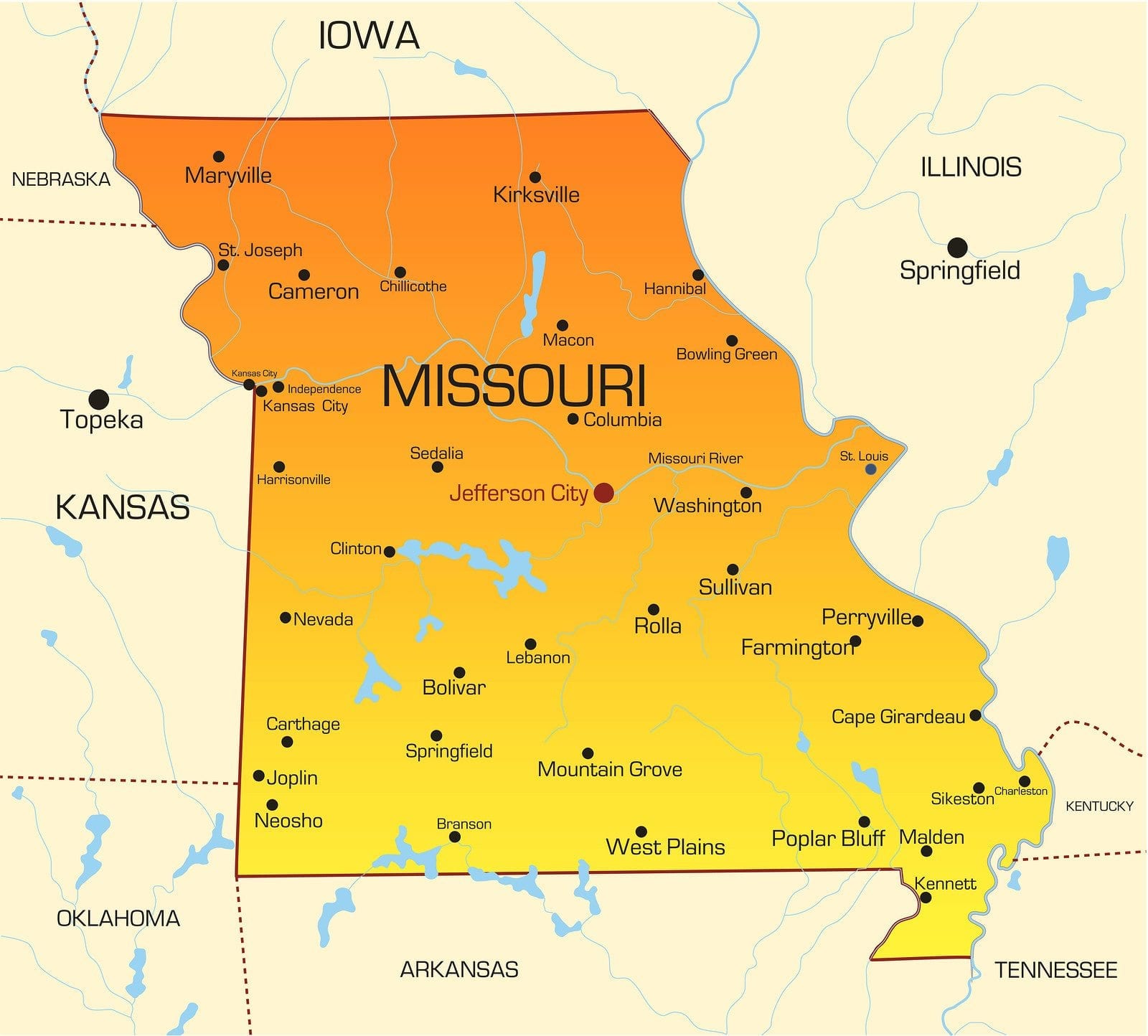
Missouri: The Bellwether State


You might know Missouri as "The Show Me State", or remember it as "that one state that compromise was named after", and while both of those things are true, one of the most interesting things about Missouri is its politics.

In political spheres, Missouri is referred to as a "bellwether" state. The original definition of bellwether was the first sheep of the flock, which wore a bell around its neck and led the flock, but in politics, this word has come to define something that demonstrates the national trend. In regards to Missouri, being a bellwether means that Missouri has voted for the winner of nearly every presidential election since 1904 (1956, 2008, and 2012 were the exceptions).

In the past, Missouri has been very much a swing state. A coalition of Republican progressives and Republican conservatives and a swarm of conservative Democrats during the 20th century made Missouri fairly balanced between political parties, and that made it a good sample for which candidate was the popular favorite among average Americans. In more recent years, the liberal cities of Kansas City in the West and St. Louis in the East have somewhat balanced out the rest of the state, which is mostly conservative.

Missouri has only broken its trend of being a bellwether state 3 times in 104 years. The first was in 1956, when the state vote for progressive Democrat Adlai Stevenson over a second term of president Eisenhower. Next, in 2008, John McCain won Missouri by a mere 4000 votes over Barack Obama, a difference of .2% of the vote. Finally, in 2012, Romney took the state in a clear victory over Obama.

In the past century, Missouri has had an incredible record of voting for winning presidents. However, some would argue that Missouri's time as a bellwether is coming to an end, as the state grows more conservative. With population increasing in conservative areas of the state but stagnation in St. Louis and Kansas City, the state is growing more solidly conservative, and may not be as good a sign of national trends anymore. One chance to see how much of a swing state Missouri truly is will be when Democratic Senator McCaskill goes up for reelection in November. If she manages to secure another term, it will be a sign that Missouri may still be a bellwether 106 years later.

https://uselectionatlas.org/INFORMATION/BELLWETHER/bellwether.php
https://en.wikipedia.org/wiki/Missouri_bellwether
http://www.theamericanconservative.com/articles/is-missouri-still-a-bellwether/

Rocket Propultion

Today there are two main types of rocket propulsion, solid and liquid. The first one to be developed was liquid. Liquid propulsion was first thought of by a Soviet school teacher in the 1920s. The idea to use it for rockets was not thought of until world war 2 were Nazi scientists experimented with rocket powered missiles. The idea of liquid rockets was again picked up by both the United States and the Soviet Union after the second world war. That sparked the space race.
In the line of missions to get to the moon, the Apollo missions, the rocket was propelled by a liquid rocket booster. The advantages to this type of fuel is that it can be throttled. This means that the pilot of the rocket can control the amount of thrust the rocket has. They can also turn it off at will if they see fit. A disadvantage of this type of fuel is that it takes up more space and is less energetic. The rocket needs to hold two tanks of liquid, one containing the fuel, and one containing the oxidizer needed for the reaction. Because the rocket used for the Apollo missions did not have any secondary boosters, the ability to adjust thrust is essential. This is why the rocket used only liquid fuel propulsion.
In the later missions like the space shuttle missions, there were a combination of solid and liquid rocket boosters. Solid rocket boosters (SBR) have a couple benefits and drawbacks. One benefit of SBRs is that they produce more thrust per weight. They also require less moving parts, this means that there is less that can go wrong. The biggest downside of SBRs is that there is no way to throttle or modulate the propulsion. Once the solid fuel is ignited, it can’t be stopped. It burns until there is no fuel left to burn. Because they are best for initial thrust to get off of the surface of the earth, all space shuttles had two of them that detaches into the ocean for recovery before the shuttle exited the atmosphere.
A combination of both solid and liquid rocket boosters is the most ideal because of the ability to have an energetic and high thrust to volume ratio to get out of the Earth’s atmosphere and a controllable second stage for finer adjustments later in the flight. From the 1960s to now, American ambition and desire to explore (and beat the Soviets) has expanded our understanding of physics, rocket propulsion, and what is possible.

Sources: